Everything changes after that first time of uprooting your life and going off into the world. It’s like nothing you’ve experienced, and there’s usually two typical reactions – you either never want it to end or you spend most of the journey wishing you were home instead. Getting on that flight home may be the toughest (or alternatively, the most gratifying) thing you ever do. But for most adventure seekers, coming down from the high of extended travel hits hard. Then, having to rein things in as you fall back into a routine and your friends eventually get tired of you repeating your travel stories over and over. It starts to sound pretentious when everything you have to say begins with, “Well when I was abroad…” But when (or if) you return, it’s easy for the memories to become all you think about; all the sights, good eats, mishaps, and new friends. But what stays in your mind the most is how surprisingly easy it is to get “out there.” Everything else in your life seems to become a series of steps towards the next adventure.

“Just do it.”
So how have I managed to do these kind of trips? Yes, the Nike slogan is perfectly applicable here. Sometimes you need to ‘just do it.’ But I’m just an average guy from Los Angeles who, ten years ago, could not have imagined doing anything remotely as insane as traveling alone in a foreign country. What changed, and how have I been able to do these long adventures?
Disclaimer time: While I’d like to have people believe otherwise, I have not truly embraced the vagabond lifestyle. Namely, I’ve returned home at the end of each adventure. Despite so badly wanting to overstay my visa, pal around with a guitar and earn my meals busking on the streets of some foreign city, each time I always come back to my life. I’ve met a few who simply decided to not to go home, and they’re still out there perpetually traveling about the world moving one job the next. Anyways, the point is that I can’t pretend to be more than an occasional traveler. I’m not Jack Kerouac or Chris McCandless by any means. Yet I have somehow managed to pack in a number of solid trips in the last couple of years. So how did I do it?
In a word: priorities. There’s more to it than that, clauses and footnotes etc. but that’s main the idea.
To engage in a multi-month trip mainly required a change in mentality. One day I decided if I ever wanted to go out and see the world I couldn’t tolerate any more excuses. I could keep on saying, “one of these days” for the rest of my life, or I could research some dates and purchase the next reasonable flight. But when I started to consider the notion of lengthy travel, I had to accept that I was not on a typical vacation.
Vacation vs. Travel
I think the main difference between a traveler and a tourist is budget. The later is only going to get on that flight if they can do so in style, and without giving up too many of the comforts from home. They aren’t looking to have anything too unexpected occur. They are not going to take on any of the risks that come with going down the path less taken. Traveling means getting away from the prescribed vacation, the experiences guaranteed to be fun, ‘or your money back.’ The world is a big place, there will be things or food or people out there that you find disagreeable. Perhaps foolishly, the adventurous soul is not discouraged by this while exploring the planet. While a cruise or guided tour can still have things go wrong, it is less tolerated or expected to happen than when you are traveling alone – relying too often on the kindness of strangers. Deviating from the packaged experience means you have to be okay with the possibility of ‘roughing it,’ of changing plans or going off with people who possibly don’t share your language or cultural values. You can’t be phased when plans fall through. You have to be hypersensitive to communication differences and cultural customs. You have to look out for yourself because no one else is. You are responsible for your own lack of knowledge to the laws and norms of a foreign place; ignorance is not bliss.
So how much of it is just bragging rights and how much is purely motivated by cost? A tourist’s luxurious weekend in a Cancun five-star resort could probably be stretched out to at least a month-long backpacking adventure across Mexico. But only if you’re okay with sleeping on couches instead of hotels, taking the long bus ride instead of a plane, and fending for yourself en Español against the occasional drug cartel or corrupt government. So the answer is that everyone’s different. I know for myself I don’t want money to limit my ability to see as much of the world as possible, even if it means I never get to sleep a proper hotel room. But I also don’t want a cookie cutter experience, I want to feel like I’m not just along for the ride but actively discovering things for myself. Most importantly, I don’t want my experiences to be filtered down to a Disney-esque tour.
To travel like this, I was forced to acknowledge that things can easily go south and it may not be all flowers and butterflies along the way. I had to consciously toss aside expectations of how things were going to go and of what places are like. So, my advice is this: to make the most of a journey you need to know what you like and what kind of things you want to do. You have to communicate this to whomever you are traveling with. You have to roll with the punches and embrace spontaneity, to be somewhat humble and respectful of the cultures you are visiting.
But all of the above are things you can figure out over time. The thing no one likes to admit is that you really, ultimately, need a surplus of time and money, even if you are couchsurfing and doing all the tricks to make it more economical. Financially, you simply need travel to be a priority above other yearly expenses – instead of going to that concert or spending a lot during nights out, you instead save up a portion of each paycheck for next year’s adventure. You have to have some existing luxury you can cut in favor of travel, some additional spending cash that gets reallocated to your flight. To be honest, for this reason overseas travel is seemingly cost-prohibitive for the true working class or ‘blue collar’ demographic, unless someone really is willing to follow the que of Jack Kerouac. This is because even for a short trip you really can’t have too many permanent obligations such as mortgage payments or a child to raise; and traveling internationally for an extended time requires a few thousand USD of disposable income. While it’s admittedly true that one can travel ‘on the cheap’ and live more affordably than at home, there are added costs such as paying for house-sitters, long-term storage or having to fork over rent when a subletter cannot be found. When you plan a trip you need a rough budget with a large margin for error. It’s my experience that you need to create some structure for yourself, but not too much. Don’t want to break the bank but don’t want to short-change yourself on the experience.
What’s even more important than financing is time. And the harsh truth is that it’s near impossible to get more than two weeks off of work as an employee in the United States.
Lifestyle Tradeoffs, Stability and Sustainability
I’ll come clean: All my trips so far were only possible because I was a college student or because I’d been between jobs. As a millennial in my late twenties who has moved back in with my parents, I like to believe that I have not settled into a stable or long-term phase of my life. One of the perks is that in doing so I have made travel more plausible for me. In fact, I feel almost obligated to make the most of these gaps between workloads; It’s exceptionally difficult for the average person to be doing their 9 to 5 and paying bills, etc. and at the same time even consider getting time off for a two-week vacation.
But if I want to continue my level of epic trips I’m going to need some sustainable pattern of life that I can happily perpetuate into my later years. The best I can come up with is to be doing some kind of a contracted job and saving up, then when work is slow I can get on that flight and live the vagabond life – only to jump right back into networking and job-hunting upon my return. Don’t really see another way to do lengthy adventures unless I become a teacher. If those future travel plans off on the horizon are to materialize, I need to free up funding and time. If I were to have kids, house payments, a career I can’t walk away from, to get married or any other number of things that can tie oneself down to a place, then those travel dreams will have to remain dreams. Will I be palling around in ten years time? In 30?
So tTime is undoubtedly the largest hurdle between you and that month of awesome. But from my experience it all comes down to priorities; we find a way to do the things we want in life. You have to want it bad enough that you rearrange your lifestyle in order to make it work. You have to be okay with the fact that none of your friends or family may be able to join you. If you end up traveling solo, you need to trust that you can handle anything thrown your way, that you will be your own best friend. You must have a desire to throw yourself out there, exposed to all that the world has to offer in a raw and unfiltered experience.
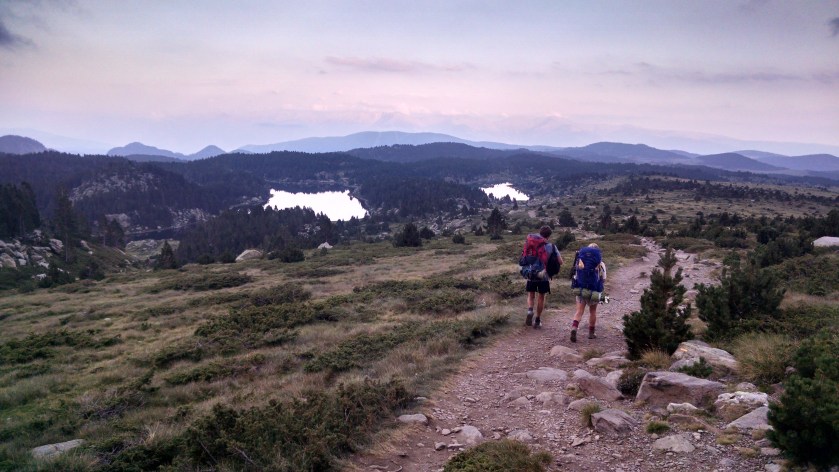
Once you get a taste of it, of that euphoria that comes with experiencing a foreign place, you will forever have itchy feet.
 A Day With Gray